Guides
What is macun honey and how to use it
Macun honey is a thick Turkish paste of honey and herbs. We explain the ingredients, its Manisa origin, dosing, storage and who should be cautious.
7 min read
Macun honey is a thick, dark paste made from honey and a blend of herbs and spices, traditionally prepared in Turkey. It is not spread on bread like ordinary honey and it is not used to sweeten tea — it is taken in small, measured amounts, by the teaspoon or from a single-serve sachet, as a food supplement.
In Serbia it is most often searched for as turski macun, crveni macun or simply macun med, and it is sold in jars of different sizes or in sachets. This article explains what macun honey actually is, where it comes from, what it contains and how to use it properly — including the things the evidence does not support.
What macun honey is
The word macun (Turkish macun, from Arabic maǧūn) means paste. In Turkish tradition it is a sweet, toffee-like mass made from sugar or honey, water, an organic acid and a blend of spices. The best-known version is mesir macunu, the traditional speciality of the city of Manisa in western Turkey.
What separates macun from plain honey is more than texture:
- Honey is the base, not the whole product. Herbal extracts and spices are added to it, so the taste is not merely sweet — it is spicy, warming, with a long finished aftertaste.
- It is dosed. One teaspoon or one sachet is one serving, which matters because this is a concentrated blend.
- It is not a medicine. In Serbia macun is sold as a food supplement and should be treated as one.
Origin: Manisa and a centuries-old tradition
Mesir macunu is tied to the Turkish city of Manisa, which holds a festival devoted to the paste every spring. The Mesir Macunu Festival was inscribed in 2012 on UNESCO's Representative List of the Intangible Cultural Heritage of Humanity (reference 00642), which says something about how deeply rooted it is in local culture.
The original Manisa recipe is traditionally described as containing 41 ingredients — a number with symbolic significance in Islamic tradition. Modern producers, however, most often use 31 ingredients, because some of the original raw materials are no longer available and others were banned as unsuitable for use in food. Ingredients therefore vary noticeably between different macuns, which makes the label on the pack more important than any generic product description.
It is also worth noting that earlier versions of macun were probably less sweet and considerably spicier than today's, which have been adapted to modern taste.
What the macun honey we sell contains
Recipes vary from batch to batch and producer to producer, but the same key ingredients recur in the macun honey we offer:
| Ingredient | What it is | Traditional role in the blend |
|---|---|---|
| Honey | The base of the paste | Carries flavour and texture, natural sweetener |
| Epimedium (horny goat weed) | A plant in the barberry family (Berberidaceae) | The most recognisable ingredient in macun |
| Ginseng | Root of a plant in the genus Panax | Traditional tonic |
| Maca | Root of an Andean plant | Traditionally used as a tonic |
| Tribulus | The plant Tribulus terrestris | Common in "male" blends |
| Ginkgo | Leaf of Ginkgo biloba | Traditionally associated with circulation |
| Ginger | Root of Zingiber officinale | Adds sharpness and warmth |
| Cinnamon | Spice from the bark of Cinnamomum | Rounds out the flavour |
| Royal jelly | A bee product | Completes the traditional recipe |
We wrote in more detail about the best-known ingredient in Epimedium (horny goat weed): what it is and what the science says.
How to use macun honey
The rules are simple, but they differ depending on the packaging.
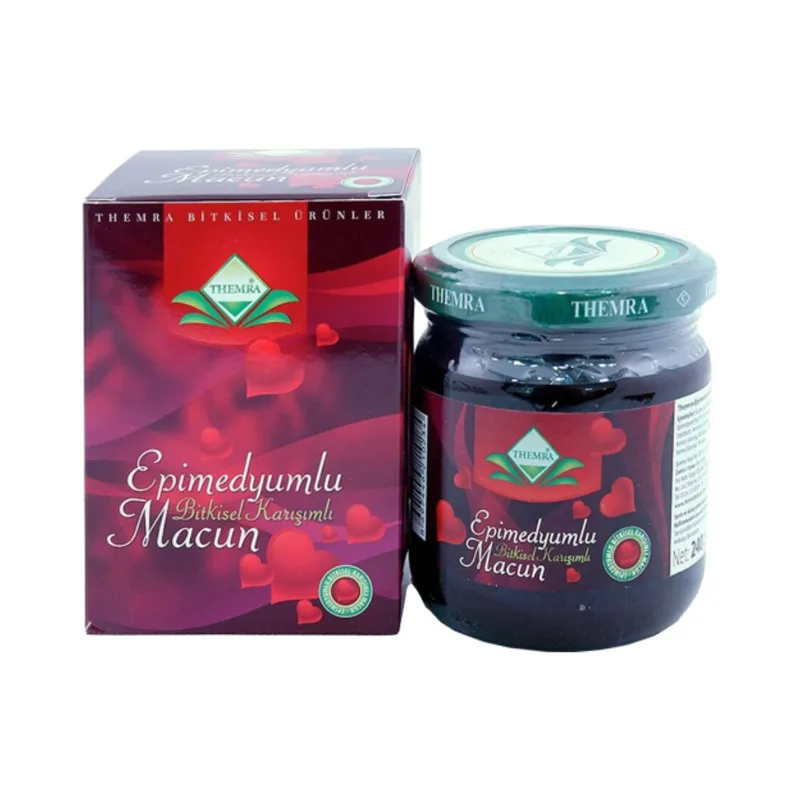
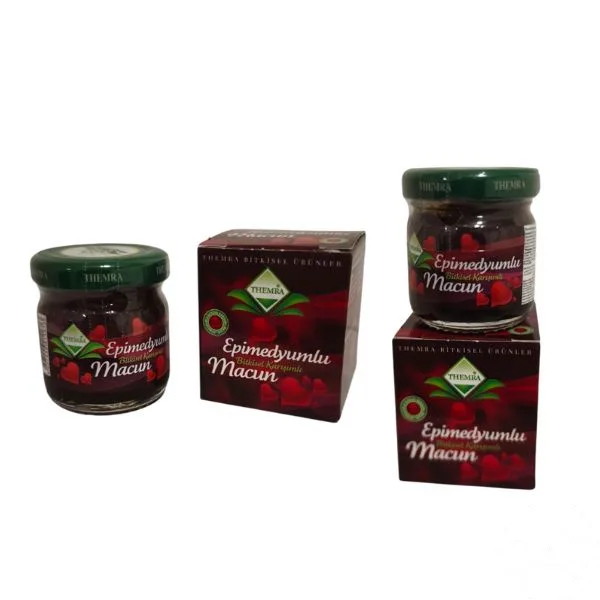
Jar (43 g or 243 g). Before each use, stir the paste well with a wooden or plastic spoon — a metal one is traditionally not recommended. Dissolve one teaspoon (about 5–10 g, depending on jar size) in your mouth or take it with a little water or milk.
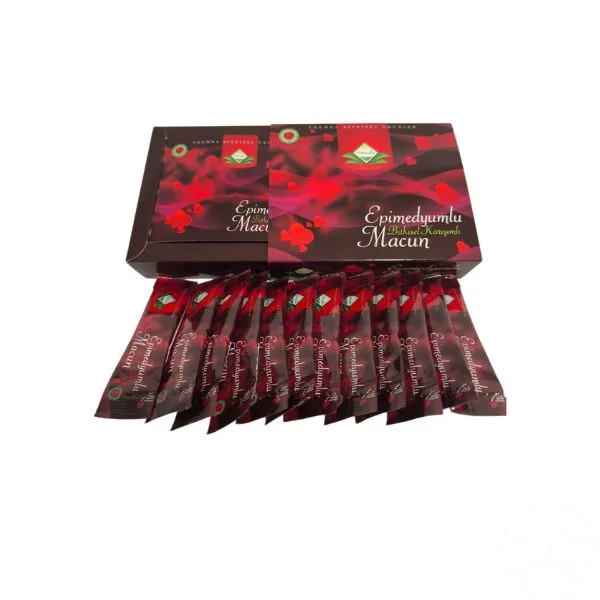
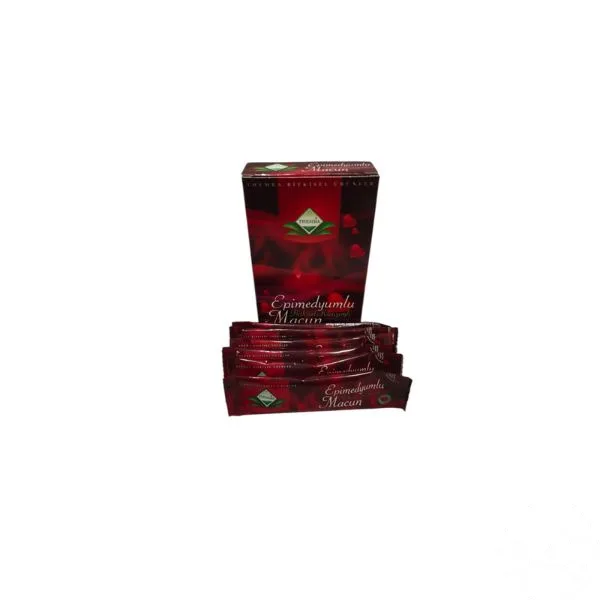
Sachets (6 × 12 g or 12 × 12 g). One sachet is one dose. Empty the contents directly into your mouth and drink a little water afterwards. There is nothing to measure, which makes sachets convenient for travel, work and discreet use.
In both cases the same applies: do not exceed the recommended daily dose on the label, and do not assume that more is better. Macun is a concentrated blend, not a spread.
If you are wondering which size to choose, we compared jars and sachets on price and practicality in Jar or sachets: which macun should you choose.
How to store it
- Somewhere dry and cool, out of the reach of children.
- It does not need refrigerating; cold does honey no favours because it speeds up crystallisation.
- Close the jar after every use and never dip a wet spoon into it — water is what genuinely spoils honey and pastes.
- Keep sachets in their original box, at room temperature.
Who should be cautious
This is the most important part of the article. Macun honey is not harmless just because it is natural:
- People with diabetes — the base of the product is honey, i.e. sugar.
- People allergic to honey, pollen or bee products — royal jelly and honey are ingredients.
- People with heart conditions, high blood pressure or on regular medication — several ingredients (including ginseng and ginkgo) can affect circulation and may interact with medicines.
- Pregnant or breastfeeding women and people under 18 — macun is not intended for these groups.
If any of the above applies to you, talk to a doctor or pharmacist before using it.
What the science says — without overselling
Macun is often advertised with claims the evidence does not support, so it is worth separating tradition from what has actually been studied.
- Ginseng has been used for centuries in the traditional medicine of China and Korea, but there is no clinical evidence that it treats or prevents any disease, and it is not approved as a therapy by regulators.
- Epimedium contains icariin, shown under laboratory conditions (in vitro) to be a weak PDE5 inhibitor. Its clinical effects in humans are not established, and there is little clinical evidence to date.
- Honey is a food with a long history of use, but it is not a substitute for treatment.
In other words: macun honey is a traditional product that has its place as a food supplement and part of a routine, but it is not a medicine and should not be presented or used as one.
Please note: everything we sell is a food supplement. This article is for information only and does not replace advice from a doctor or pharmacist.
Frequently asked questions
Is macun honey the same as ordinary honey?
No. Ordinary honey is a single-ingredient food, while macun is a paste of honey plus a blend of herbs and spices. Macun is taken in small, measured amounts as a food supplement, not as a sweetener or a spread.
How much macun honey can be taken per day?
As much as the product label states — usually one teaspoon from a jar or one sachet per day. The recommended daily dose should not be exceeded.
Why is a wooden rather than a metal spoon recommended?
It is a traditional practice connected with honey and thick pastes: a metal spoon can scratch the container and is traditionally considered unsuitable for stirring honey. The more practical reason is simply the producer's habit of stirring the paste gently so the herbs are evenly distributed.
Can people with diabetes use macun honey?
Not without consulting a doctor. The base of the product is honey, i.e. sugar, so macun is not suitable for people managing their carbohydrate intake.
Is macun honey a potency medicine?
No, and it should not be used as one. Macun is a food supplement. Its epimedium ingredient contains icariin, a weak PDE5 inhibitor under laboratory conditions, but its clinical effects in humans are not established. For health problems, see a doctor.
How should macun honey be stored?
Somewhere dry and cool, out of the reach of children, with the jar closed after every use. Refrigeration is not needed, and a wet spoon should never go into the jar.